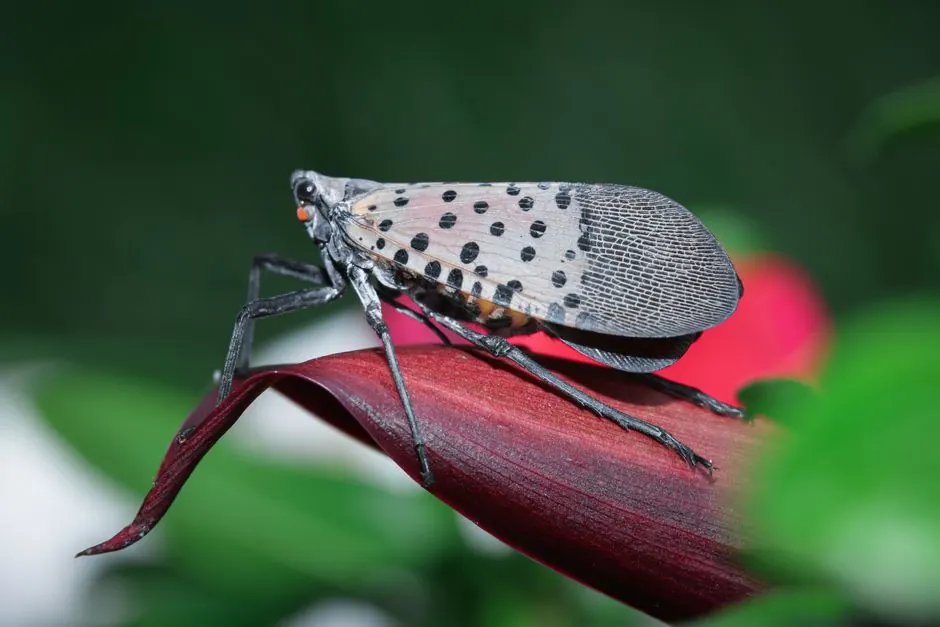
Identifying Spotted Lanternflies in Maryland is crucial for protecting local ecosystems and agriculture. These invasive pests can cause significant damage to trees and crops, making early identification essential for effective control. This guide will help you recognize these pests, understand their signs, and learn what to do if you encounter them.
Spotted Lanternfly is an invasive insect that feeds on the sap of various trees, including fruit trees, hardwoods, and ornamentals. Native to Asia, they were first identified in the United States in Pennsylvania in 2014 and have since spread to several states, including Maryland.
What is a Spotted Lanternfly?
The Spotted Lanternfly, Lycorma delicatula, is a planthopper known for its distinctive appearance. Adults are approximately 1 inch long with a wingspan of about 2 inches. Their forewings are gray with black spots, while their hindwings are red with black spots, making them easily recognizable. Nymphs are black with white spots and turn red as they mature.
How to Identify Spotted Lanternflies in Maryland
To identify Spotted Lanternflies in Maryland, look for the following characteristics:
- Coloration: Adults have gray wings with black spots and red underwings. Nymphs start black and white and transition to red as they mature.
- Size: Adults are about 1 inch long, while nymphs are smaller, ranging from 1/4 to 1 inch.
- Habitat: They are often found on tree trunks, particularly on Tree of Heaven (Ailanthus altissima), their preferred host.
- Behavior: They tend to gather in large numbers, often creating a sticky residue (honeydew) that attracts other pests.
If you suspect you have Spotted Lanternflies, you can report your findings to the Maryland Department of Agriculture.
Signs of Spotted Lanternflies
Besides the insects themselves, look for these signs of Spotted Lanternflies:
- Honeydew: A sticky substance excreted by the insects that can attract other pests, leading to sooty mold on plants.
- Wilting or dying plants: As they feed, they can weaken and kill trees, especially fruit trees and hardwoods.
- Falling leaves: Trees infested with Spotted Lanternflies may shed leaves prematurely.
For homeowners in areas like Pest Control in Baltimore, recognizing these signs early can help mitigate damage.
Common Mistakes in Identification
Many people confuse Spotted Lanternflies with other insects. Here are some common mistakes:
- Confusing nymphs with other planthoppers: Nymphs can resemble other small insects, but their distinctive color pattern sets them apart.
- Ignoring signs of honeydew: The sticky residue can be mistaken for other pest activity. Always consider the possibility of Spotted Lanternflies if you see honeydew.
- Underestimating their impact: Some may think these pests are harmless, but they can seriously damage trees and crops.
For effective pest control for Spotted Lanternflies in Maryland, understanding these mistakes is crucial.
What to Do If You Find Spotted Lanternflies
If you find Spotted Lanternflies, take immediate action:
- Report the sighting: Contact the Maryland Department of Agriculture to report your findings.
- Remove them: Use a plastic bag to capture and dispose of any you see. Be sure to check the underside of leaves and tree bark.
- Consider insecticides: If the infestation is severe, consult a professional for appropriate pest management in Maryland.
In areas like Pest Control in Frederick, local experts can provide tailored solutions for managing these pests.
When to Call a Professional
Calling a professional is recommended if you notice a significant infestation or if you're unsure about identifying Spotted Lanternflies. Maryland Pest Pros can provide expert assistance in controlling these pests effectively while ensuring the safety of your home and garden.
Frequently Asked Questions
How do I know if I have Spotted Lanternflies in Maryland? Look for the insects themselves, honeydew, and signs of plant damage. If you see these, you likely have an infestation.
What should I do if I find Spotted Lanternflies in Maryland? Report the sighting, remove the insects, and consider insecticides if the infestation is severe.
Are Spotted Lanternflies a problem in Maryland? Yes, they pose a significant threat to trees and crops, particularly in agricultural areas.
How can I prevent Spotted Lanternflies? Regularly inspect your property, remove potential host plants, and maintain healthy trees to reduce the risk of infestation.
What are the best control methods for Spotted Lanternflies? Integrated Pest Management (IPM) strategies, including cultural, mechanical, and chemical controls, are effective. Consulting professionals can help tailor a plan.